
Research
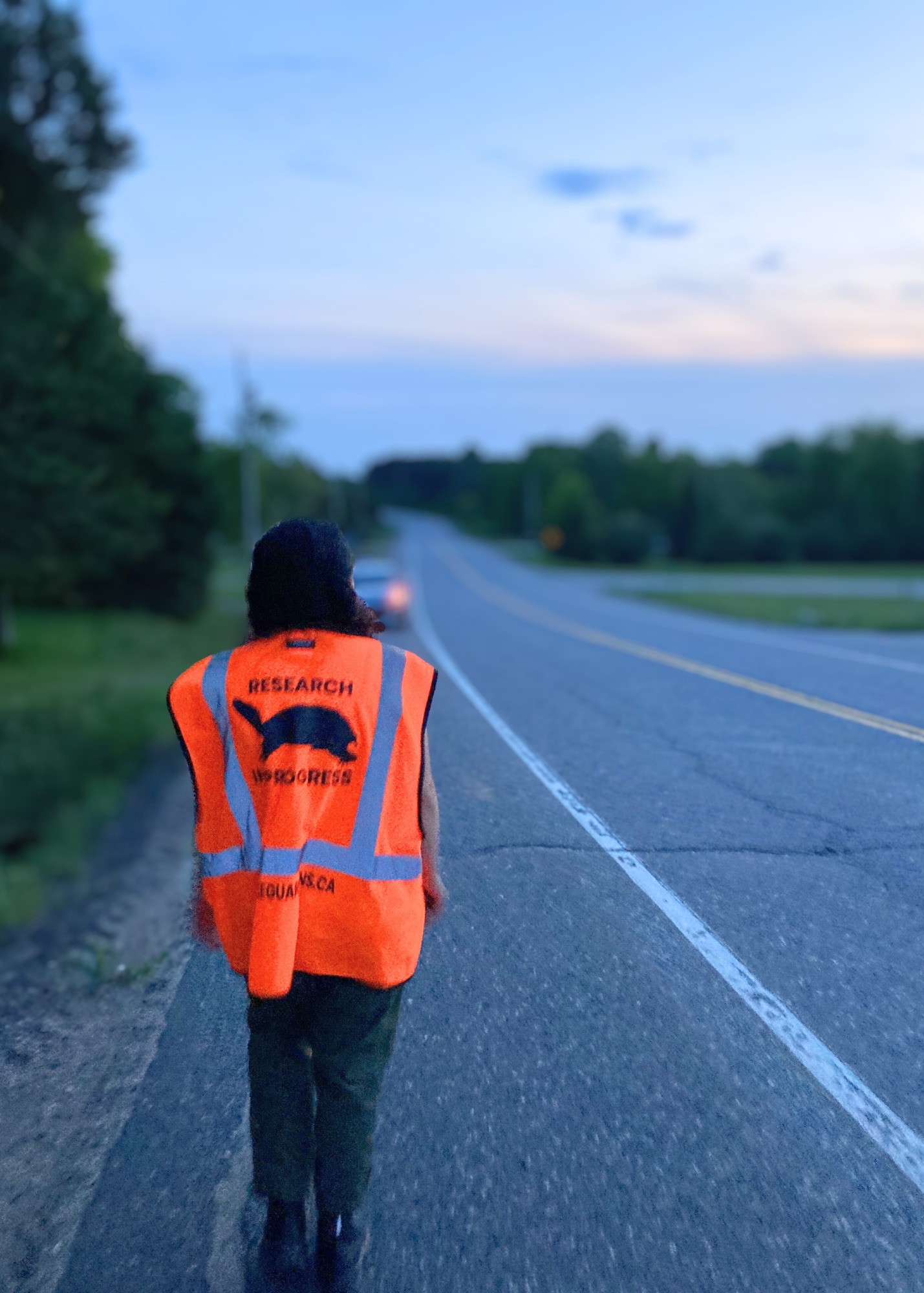
Turtle Guardians conducts applied research to answer emerging questions about threats to turtle populations and recovery. Our long-term field programs allow us to recognize changes and unusual patterns as they emerge, investigate their significance, and identify new areas where research is urgently needed.
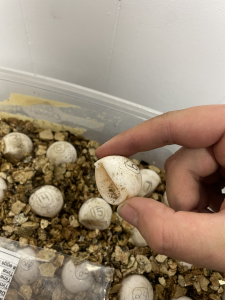
Our research spans road ecology and population trends, mortality and recruitment, nesting and reproductive ecology, egg viability and implosions, hatchling success, deformities and other emerging health concerns.
Just as importantly, our work helps us identify what we don't yet understand. Field observations, unexpected events and patterns within our long-term datasets can reveal new questions that warrant investigation. We document these observations, review the available science and work with research partners and specialists to develop new studies and research priorities.
Our Research Approach
Our research begins with what we see in the field and the questions that emerge from our long-term work with turtles. We design and conduct field research, collect and manage our own data, and use spatial and GIS analyses to explore patterns and trends across populations and landscapes.
Some questions we investigate ourselves, while others benefit from bringing together different areas of expertise. Where appropriate, we work in co-production with university researchers and other specialists, drawing on expertise in statistics, toxicology, laboratory analysis and other disciplines to complement our field research and data.
This combination of long-term field knowledge, extensive datasets, spatial analysis and collaborative expertise allows us to follow important questions wherever they lead, from understanding population declines to investigating unusual changes in eggs and hatchlings.
Ultimately, our research is about recognizing emerging threats, asking the questions that matter, and generating knowledge that can help guide turtle conservation and recovery.
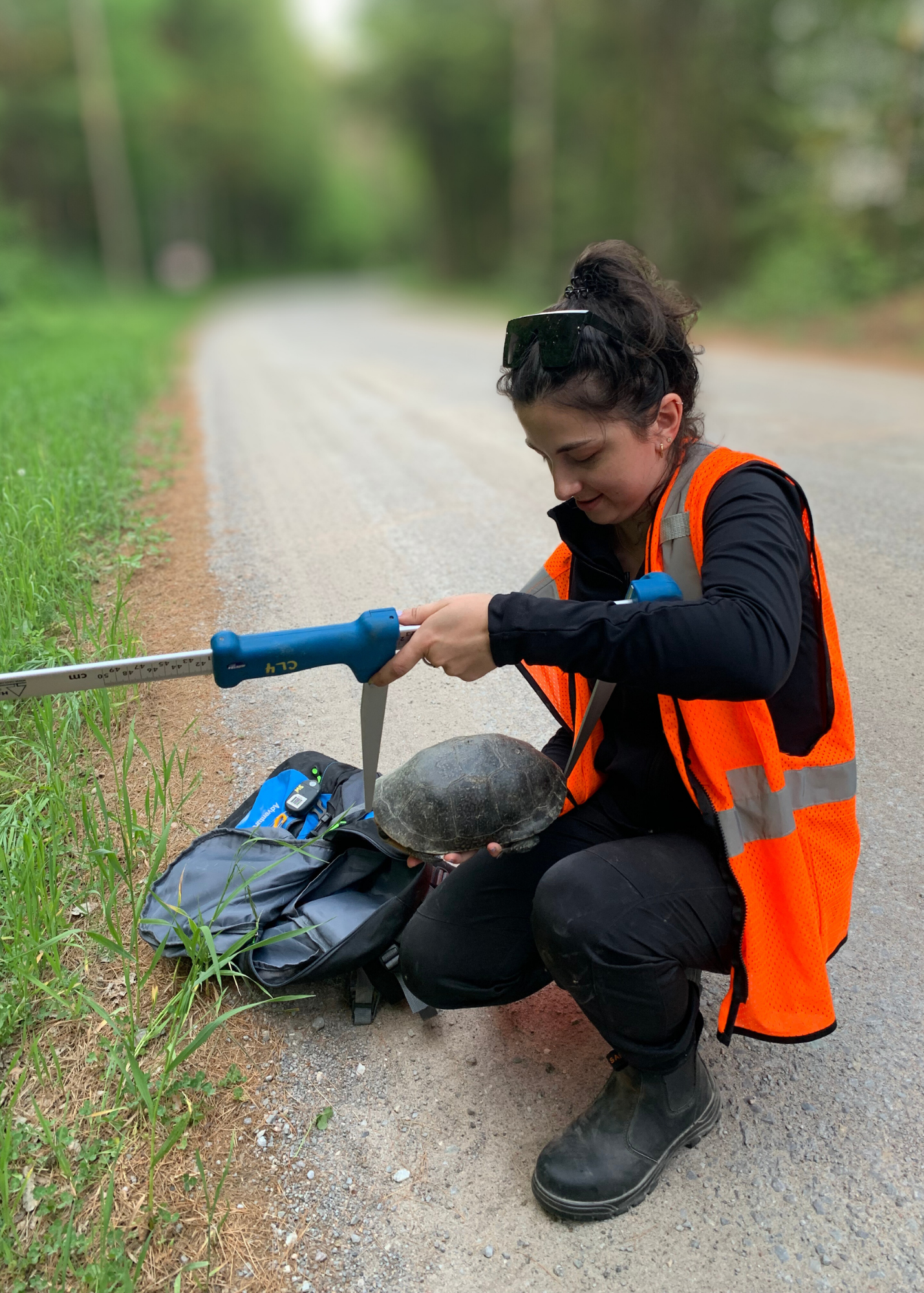
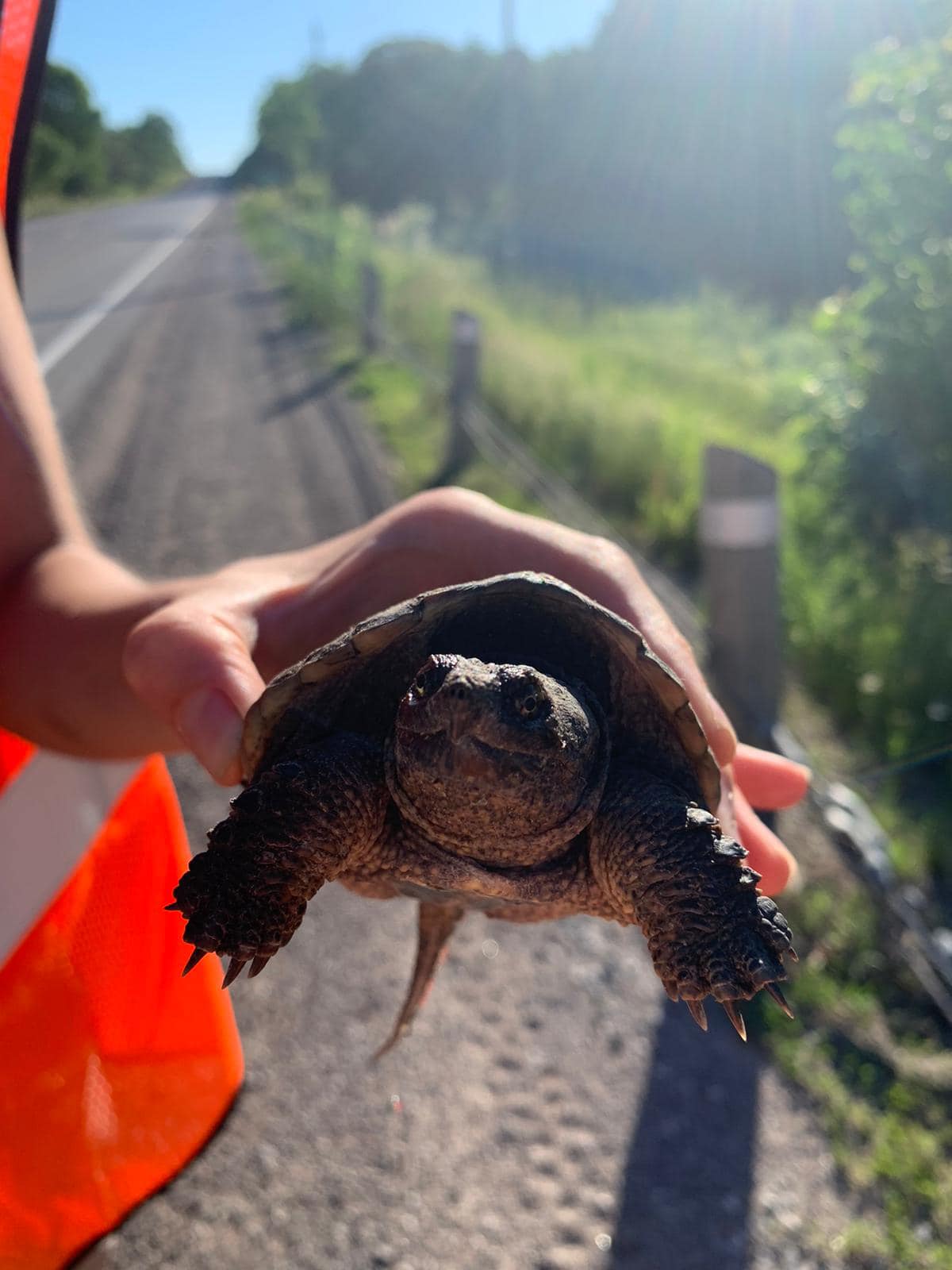
Current Research Efforts
Research Projects and Archives
Turtle Guardians' research program has developed through nearly two decades of field observation, monitoring, experimentation and collaboration. The archive below documents the origins and leadership of our research projects and recognizes the specific contributions of staff, students, volunteers, advisors and research partners.
Blanding's Turtle Relative Abundance | 2007-present
- Assessment of Blanding's Turtle relative abundance across The Land Between region.
- Initiated and led by: Leora Berman.
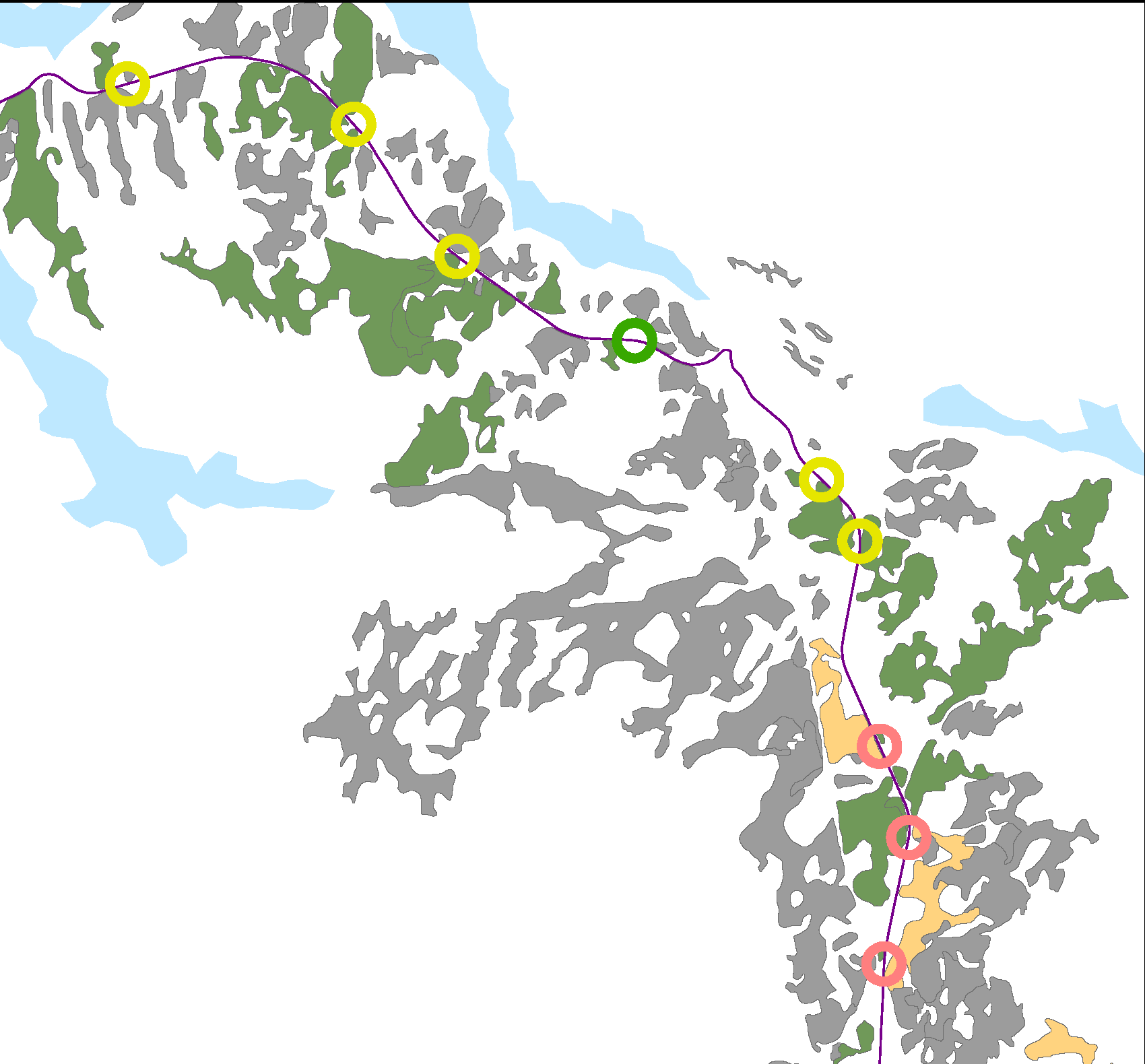
Turtle Mortality Hotspots & Mitigation Prioritization | 2010-present
- Identification of turtle mortality hotspots across The Land Between bioregion and characterization of mitigation options. Ongoing efforts to assess the feasibility and priority of potential ecopassage sites remain a core focus of Turtle Guardians.
- Leads: Leora Berman, Kendra Chalmers, Daniel Grenon, Kyle Miller.
Basking & Overwintering Surveys | 2016-present
- Basking surveys supporting overwintering analyses across Haliburton, northern Peterborough and the City of Kawartha Lakes.
- Leads: Leora Berman, Grace Wiley and Karmin Macdonald. Special thanks to Meghan Ward.
Population Ecology, Road Density & Development | 2016-present
- Long-term population ecology research spanning Haliburton County, Peterborough County, the City of Kawartha Lakes and portions of the District of Muskoka, examining turtle populations in relation to road density, landscape connectivity, habitat availability and development. The dataset represents a long-term study, with analyses beginning in 2025.
- Initiated and led by: Leora Berman.
Research assistance: Kyle Miller, Al Lu and Esme Bachelor. Special thanks to Meghan Ward and Dr. Doug Armstrong
Blanding's Turtle Movement & Mark-Recapture | 2017-present
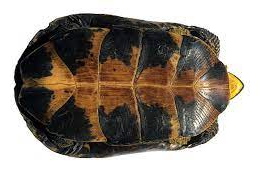
- Long-term individual identification using plastron markings to investigate Blanding's Turtle movements and recapture. This is an ongoing research effort conducted under wildlife research permits.
- Leads: Leora Berman, Jaime Kearnan and Grace Wiley.
Tiny Turtle Contest: Recruitment & Spring Emergence | 2018-present
- Ongoing collection of community-generated data through our Tiny Turtle Contest, documenting Snapping Turtle nesting areas, recruitment and spring emergence.
- Initiated and led by: Leora Berman.
Incubation Success & Developmental Anomalies | 2018-present
- Long-term documentation of incubation activities, outcomes, hatching success and developmental anomalies through Turtle Guardians' regional nest excavation, incubation and hatchling-release program.
- Program and research leadership, 2018-Present: Leora Berman, including staff and volunteer dispatch, coordination of the regional excavation program and development of the long-term program and dataset.
- Incubation and data coordination: Krysten Bennett, Emma Russett and Nadia Pegliaro (2020–2023); Haley Davidson and Molly Ahmed (2024); and Darian Carpenter and Meadow Funkenhauser (2025) incubation and data management, documentation of egg implosions and in 2026 organization nest excavation and hatchling releases. Special Thanks to Michaela Bouffard (2025) for data management support and field staff mentorship.
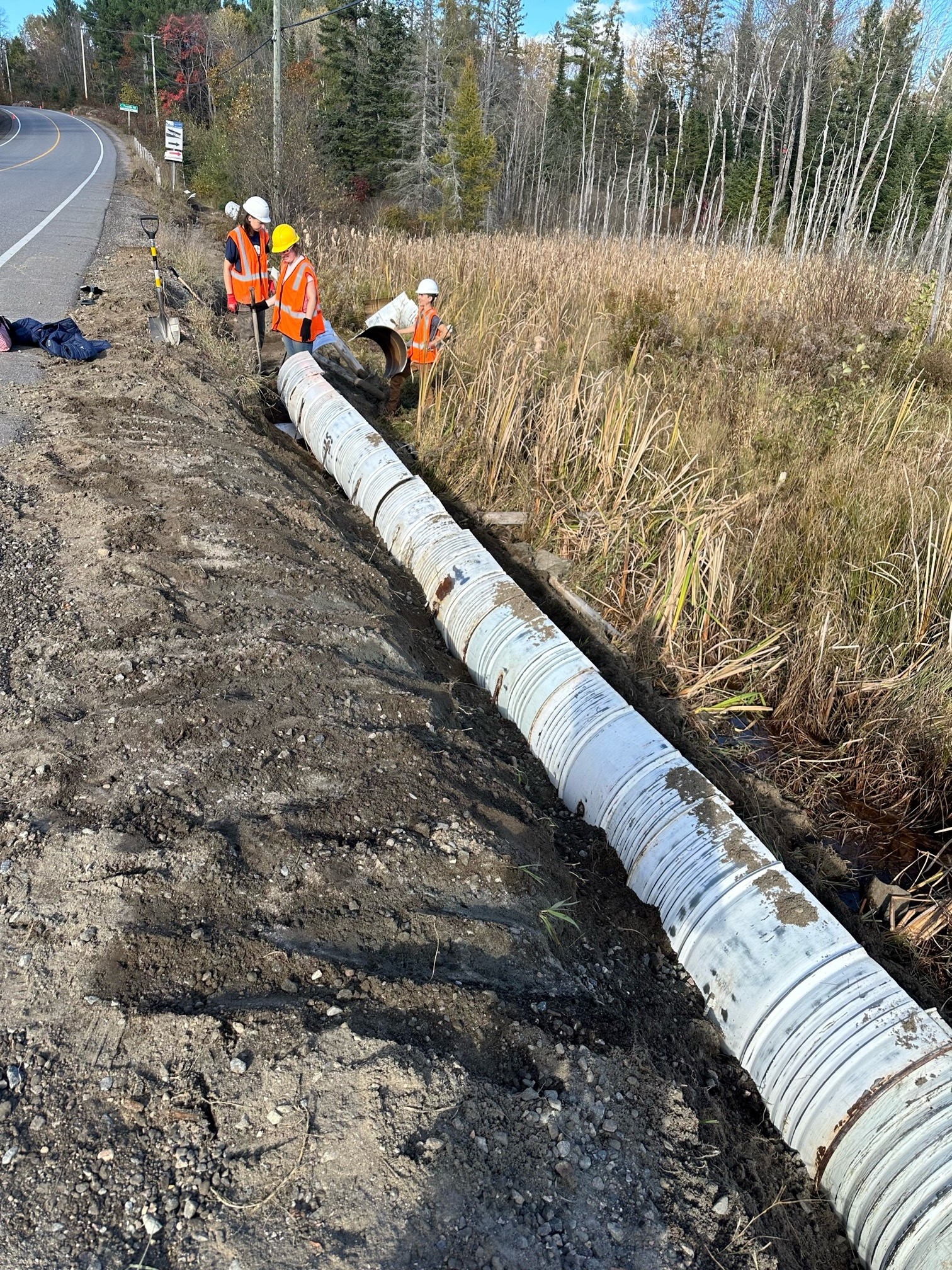
Ecopassage Fencing Design & Field Trials | 2018-present
- Design, development and field trials of Turtle Guardians' innovative durable and backfilled ecopassage exclusion and jump-out fencing system, including testing of prototype stability, durability and effectiveness.
- Prototype designer and research lead: Leora Berman. The design was established in 2018, with development and field testing beginning in 2019 and continuing to the present.
- We gratefully acknowledge the partnerships of the Haliburton County Roads Department, City of Kawartha Lakes and Peterborough County Roads in supporting field applications and trials beginning in 2019.
Turtle Egg Implosions | 2022-present
- Development of a preliminary hypothesis concerning turtle egg implosions began in 2022, followed by collection of preliminary data on egg implosions (2023, 2024, 2025) and mapping of aquatic calcium levels in 2025.
- Research origin and lead: Leora Berman.
- Incubation coordinators and team: contributed to ongoing observations and data collection.
- Michaela Bouffard and Trent University (October 2024-January 2026): supported the development and implementation of the egg-implosion sampling protocol, data capture and management in 2025.
Midland Painted Turtle Movement & Photo Identification | 2023-present
- Ongoing use of bridge-based photographic identification to investigate Midland Painted Turtle movements and support mark-recapture sampling.
- Research design: Leora Berman, Jaime Kearnan and Grace Wiley.
Alternative Nesting Mound Pilot: Blanding's Turtles | 2023-present
- Field testing of alternative nesting areas and nesting substrates for Blanding's Turtles.
- Lead: Leora Berman.
- Advisor: Kari Gunson, EcoKare Intl.
Snapping Turtle Overwintering Habitat & Water Levels | 2025-present
- Ongoing investigation of overwintering habitat availability and the potential effects of changing water levels on Snapping Turtles.
- Lead: Leora Berman.
Ecopassage Willingness-to-Use Study | Upcoming
- Proposed post-installation research examining turtle willingness to use ecopassages and supporting evaluation of mitigation effectiveness and success following implementation.
- Research proposal: Michaela Bouffard (2025) researched and drafted the proposed study.
Juvenile Turtle Responses to Exclusion Fencing | Proposed
- Research arising from the discovery of two deceased juvenile turtles adjacent to exposed portions of ecopassage fencing in 2025. The proposed study will investigate whether juvenile turtles demonstrate behavioural hesitation in response to perceived or actual physical obstacles.
- Research question: Leora Berman.
- Lead: Open
Adult Turtle Movement & Anthropogenic Footprints | Pending
- Proposed investigation of adult turtle movements in response to anthropogenic landscape features.
- Leads: Dr. Sarah Jamieson and Leora Berman.
Hatchling Response to Pheromone Cues | Exploratory Study
- An exploratory study investigated whether hatchling turtles demonstrated a detectable response to pheromone cues. The initial sampling design did not provide sufficient environmental control to reliably distinguish a response to the experimental cue from other environmental influences. The study therefore did not produce results suitable for drawing conclusions about pheromone response.
- The trial did, however, provide useful lessons for future research, particularly regarding environmental controls, experimental isolation, crypsis, replication and the practical feasibility of conducting controlled behavioural trials within our available facilities. Future investigation would require a more controlled experimental environment and methodology capable of separating treatment effects from background environmental variables.
- Hypothesis and research question: Leora Berman.
Initial sampling design: Michaela Bouffard.
Outcome: Exploratory trial; methodology determined to be insufficient for hypothesis testing.
Best Management Practices, Literature Reviews & Technical Resources | 2017-present
- Turtle Guardians develops best management practices, technical guidance and research reviews based on published literature, long-term field experience and findings arising from our road ecology, nesting and mitigation work.
- Leora Berman | 2017–present: Ecopassage specifications and installation guidance; Blanding's Turtle alternative nesting-mound BMPs; and BMPs for protecting turtle nests during routine road maintenance.
- Sabrina Hasselfelt | 2019: Literature review of nesting-mound design, nesting preferences, and nest mound design best practices.
- Angela VanderEyken | 2020-2021: Review of best practices in turtle road ecology; extensive review of potential ecopassage sites lending to the charity's final analysis.
- Michaela Bouffard | 2024–2025: Review of HDPE use in road-threat mitigation designs; review comparing Turtle Guardians' existing low-cost ecopassage designs with conventional lateral fencing approaches; summary of ecopassage and nest mound best practices.
Turtle Guardians is committed to accurately recognizing intellectual contributions. Project histories, research roles and contributions are documented through our organizational archives.
Special Thanks
Since 2007, Leora Berman has led and coordinated Turtle Guardians' long-term research in turtle road ecology, nesting, incubation, movement, mortality and mitigation across Ontario's Highlands and surrounding regions. This work has included the development of research questions and scopes, field methodologies, monitoring protocols, ecopassage designs and testing, community science frameworks, and long-term datasets that continue to inform conservation action and applied mitigation.
Our research has been strengthened through the guidance, mentorship and collaboration of many valued experts and partners. We are especially grateful to Kari Gunson of Eco-Kare International, Jeff Hathaway of Scales Nature Park, and Dr. David Lean for sharing their expertise and advice over the years.
We also acknowledge the contributions of students, interns and emerging researchers through programs including U-Links and the Trent Centre for Community-Based Education, as well as an early partnership from 2011 to 2013 with the Haliburton Highlands Land Trust and Glenside Ecological Services to assess ecopassage potential in the Haliburton Highlands.
In 2026, we also acknowledge Stephan Kohout for ongoing research contributions related to legislative tools and policy pathways for turtle protection in Ontario.
Staff & Research Contributors
The following staff and team members have contributed to Turtle Guardians' research, monitoring, field implementation and data collection as part of our broader long-term research programs:
- Kendra Chalmers, September 2010 to 2013
- Jaime Kearnan, May 2017 to April 2022
- Daniel Grenon, May 2017 to August 2022
- Siena Smith, May 2017 to March 2023
- Angela VanderEyken, May 2020 to August 2022
- Kristyn Bennett, May 2020 to September 2022
- Sabrina Hasselfelt, May to September 2021
- Grace Wiley, May 2020 to January 2025
- Ben Kemp, May 2021 to August 2024
- Michaela Bouffard, April 2024 to January 2026
- Meghan Ward, 2023 and 2024; October 2025 to May 2026
- Kyle Miller, Darian Carpenter and Sarah Hutchison, January 2026 to present
Student Researchers
- Esme Batchelor, 2025 to 2026
- Karmin McDonald, 2025 to 2026
Turtle Guardians values the intellectual contributions of the staff, students, volunteers, advisors and collaborators who have contributed to our research. Research roles, project histories and contributions are documented through our organizational archives.
Notable Field Observations & Emerging Research Questions
Research Collaboration, Data Sharing & Attribution
Turtle Guardians and The Land Between maintain extensive long-term datasets and active research programs. Together with our research colleagues, we are advancing work on complex conservation questions that benefit from deeper analysis, specialized expertise and cross-institutional collaboration.
Beginning in 2025, we introduced a co-production model for collaborative research and began developing more formal frameworks for partnerships with universities and other research institutions.
Observations and findings arising through Turtle Guardians' long-term programs contribute to our broader research and monitoring efforts. Where staff, students or collaborators make distinct intellectual or research contributions, these are recognized and credited appropriately, including as separate or independent contributions where warranted.
We are developing collaborative frameworks and policies to guide data sharing, research partnerships, authorship, intellectual property and attribution. These are intended to recognize and respect contributions, uphold institutional and academic standards, and ensure reciprocal benefits for research partners, students and communities.
This work is being informed through consultation with universities, professors and disciplinary experts to support alignment with research ethics, authorship conventions, data stewardship expectations and funder requirements.
Our approach is grounded in transparency, accountability and fairness. As these frameworks are finalized, we will make our policies and research partnership opportunities publicly available to support strong, ethical and productive collaborations that advance turtle conservation and recovery.